
Stop Sooner, Spend Smarter: Understanding Honda Brake Costs
Hearing a squeak when you tap the brakes on Jericho Turnpike or feeling a shake in the steering wheel on the Northern State can make any driver a little nervous. You know something is going on with your brakes, but it is hard to tell what you actually need or what a fair Honda brake service should include. The word “brakes” covers several different parts, and each one has its own timing and level of urgency.
For Honda drivers in Hicksville and nearby Long Island areas, it helps to break things down into three main services: brake pads, brake rotors, and brake fluid. Each one does a different job, wears out in a different way, and gives its own warning signs when it is time for attention. When you understand what each part does, it is easier to feel calm and confident instead of worried every time you step on the pedal.
At our Honda dealership in Glen Head, we work with drivers from Hicksville, Port Washington, Great Neck, Hempstead, and many other nearby communities. We see the same patterns every day, especially with local stop-and-go traffic and changing weather. Let us walk through what is going on behind your wheels so you know when to search “Honda brake service” and what to expect when you do.
Brake Pads 101: Costs, Lifespan, and Warning Signs
Brake pads are the part of your brake system that do the hard work every time you slow down. When you press the pedal, the pads clamp onto the metal rotor that is attached to the wheel. That friction is what brings your Honda to a stop, which means the pads slowly wear away over time.
How long they last can depend on how and where you drive. Things that can shorten pad life include:
- Heavy stop-and-go traffic on the LIE or Northern State
- Frequent short trips around Hicksville, with lots of lights and stop signs
- Hard braking from higher speeds
- Driving with extra weight, like a full car of passengers or cargo
Brake pads are usually one of the more routine brake services. At a Honda dealership, pad replacement often includes:
- Installing genuine Honda brake pads for your exact model
- Inspecting calipers, slide pins, and hardware for proper movement
- Checking rotors for signs of damage
- A test drive to confirm smooth, quiet braking
You may not see the pads directly, but they do give you clues when they are getting thin. Common warning signs include:
- High-pitched squealing when braking
- Grinding or scraping sounds
- Needing more distance to stop
- Heavy brake-dust buildup on your wheels
- Brake warning lights on the dash
Ignoring worn pads can lead to the metal backing rubbing directly on the rotors. That is when you start getting deeper grooves and more serious damage, which can lead to more involved repairs later. Using genuine Honda pads that are made to fit your specific model can help them wear evenly, work quietly, and last as they were designed to, which is easier on your rotors and your budget over time.
Rotors and Calipers: When Repairs Get More Serious
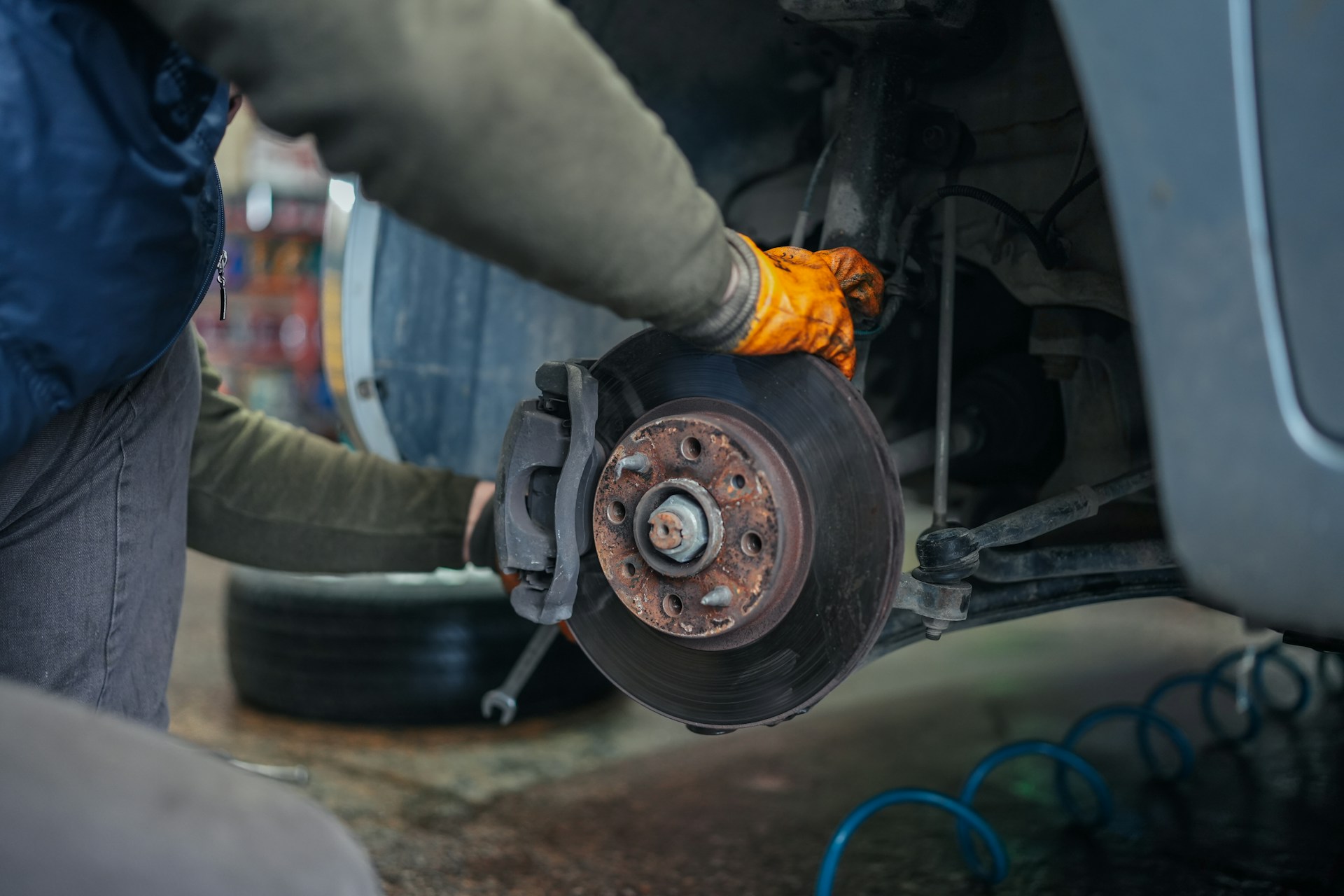
Rotors are the large metal discs that sit behind your wheels. The pads squeeze against them to create the friction that slows your Honda. Over time, heat, rust, and repeated heavy braking can cause rotors to warp, thin out, or develop deep grooves.
Our local Long Island climate does not make it easier on them. Humid summers, wet weather, and salty winter roads can all speed up rust on the rotor surface. When rotors start to wear out or warp, you might notice:
- Vibration or pulsing in the brake pedal
- Shaking in the steering wheel when braking
- Scraping or grinding noises
- Visible grooves or uneven spots through the wheel openings
There are usually two main ways to deal with worn rotors. Resurfacing, sometimes called “machining,” means removing a thin layer of metal to smooth the surface. Replacing rotors means installing new ones that meet current thickness and safety standards. At many dealerships, replacement is often recommended when rotors are too thin, badly warped, or heavily rusted, since there is less material left to safely resurface.
Calipers and brake hardware can also affect how your brakes feel and how long parts last. If a caliper seizes or a slide pin gets stuck, one pad can drag against the rotor all the time. That can cause:
- Uneven pad wear
- Pulling to one side when braking
- Extra heat and faster rotor wear
A careful brake inspection can catch these issues early, before they turn into bigger repairs. Timely pad service is one of the best ways to protect your rotors, since fresh pads are less likely to dig into the metal and cause deeper damage.
Brake Fluid Service: The Hidden Safety Expense
Brake fluid is what connects your foot to your brakes. When you press the pedal, the fluid carries that pressure through small lines to the calipers and wheel cylinders. Without healthy fluid, the system cannot build the pressure it needs to stop your Honda as smoothly and quickly as designed.
Brake fluid is designed to handle heat, but it also slowly absorbs moisture from the air over time. In a coastal area like Long Island, with humid summers and damp seasons, that moisture can build up faster. When that happens, it can lead to:
- Rust and corrosion inside brake lines and components
- A softer or “spongy” feeling brake pedal
- Reduced braking power under hard stops or long downhill grades
Brake fluid does not wear out overnight, but it does age. Honda vehicles generally have time or mileage-based recommendations for brake fluid replacement. Compared with some other brake jobs, fluid service is often a smaller part of your maintenance schedule, but it still plays a big role in overall safety.
Warning signs of old or contaminated brake fluid can include a soft pedal, the pedal sinking farther than normal, or feeling like the car takes longer to stop. During a professional inspection, technicians can check both the level and the condition of the fluid. Replacing it on a regular schedule works like inexpensive insurance, helping protect more costly brake parts and keeping the system working as it should.
Choosing Honda Brake Service in Hicksville
Driving in and around Hicksville is tough on brakes. Daily life might mean crawling along Jericho Turnpike, easing through school zones, and making lots of short trips where the brakes never really get a rest. Add in hot, sunny days and cold, wet winters, and your brake system has a lot to handle.
When it is time for brake work, having Honda-focused care makes a difference. With factory-trained technicians and Honda-specific tools and information, a dealership service team can:
- Match the right pads and rotors to your exact Honda model
- Follow Honda procedures for inspections and brake fluid service
- Spot pattern issues common to certain models
- Give clearer explanations of what is urgent and what can wait
On paper, some brake offers might look very low at first glance. That can sometimes mean generic parts, quick pad-only jobs, or basic service that does not include a full check of calipers, hardware, and fluid. When that happens, problems can pop up again sooner, which may cost more in the long run.
A detailed estimate that separates pads, rotors, and fluid service helps you see what you are paying for and why. Many drivers who search “Honda brake service” also look at online reviews, service specials, and payment options so they can keep their brakes in shape without surprises.
Turn Brake Worries Into Confidence
When you break things down, Honda brake care is easier to understand:
- Brake pads are routine wear items and need attention most often
- Rotors usually come into play when you feel vibration, pulsing, or hear grinding
- Brake fluid follows a time or mileage schedule and protects the whole system
Knowing which part does what helps you make calm choices instead of guessing. A quick brake check before big driving seasons, like summer road trips or busy holiday travel, can give you peace of mind before you load up the car and hit the road.
At North Shore Honda, we help drivers from Hicksville, Port Washington, Great Neck, Hempstead, and nearby areas stay ahead of brake problems. Our team can explain pad, rotor, and fluid needs in simple terms, walk you through a line-by-line estimate, and help you choose the timing that makes sense for your safety and your budget.
Keep Your Honda Stopping Safely and Confidently
If your brakes feel different or you are due for routine maintenance, North Shore Honda is ready to help you stay safe on every drive. Explore our recommended maintenance schedule and learn when to schedule a trusted Honda brake service near me so you can plan your visit with confidence. If you have questions or want to book an appointment, simply contact us and our team will guide you through your next service step.
Connect with us


- July 2026
- June 2026
- May 2026
- April 2026
- March 2026
- February 2026
- December 2025
- October 2025
- July 2025
- May 2025
- April 2025
- March 2025
- August 2024
- July 2024
- June 2024
- April 2024
- March 2024
- January 2024
- July 2023
- May 2023
- April 2023
- March 2023
- November 2022
- October 2022
- September 2022
- August 2022
- July 2022
- June 2022
- May 2022
- April 2022
- March 2022
- January 2022
- July 2021
- April 2021
- January 2021
- December 2020