Blog

Honda Brake Service Costs in Hicksville: Pads vs. Rotors vs. Fluid

Brake Service

Stop Sooner, Spend Smarter: Understanding Honda Brake Costs

Hearing a squeak when you tap the brakes on Jericho Turnpike or feeling a shake in the steering wheel on the Northern State can make any driver a little nervous. You know something is going on with your brakes, but it is hard to tell what you actually need or what a fair Honda brake service should include. The word “brakes” covers several different parts, and each one has its own timing and level of urgency.

For Honda drivers in Hicksville and nearby Long Island areas, it helps to break things down into three main services: brake pads, brake rotors, and brake fluid. Each one does a different job, wears out in a different way, and gives its own warning signs when it is time for attention. When you understand what each part does, it is easier to feel calm and confident instead of worried every time you step on the pedal.

At our Honda dealership in Glen Head, we work with drivers from Hicksville, Port Washington, Great Neck, Hempstead, and many other nearby communities. We see the same patterns every day, especially with local stop-and-go traffic and changing weather. Let us walk through what is going on behind your wheels so you know when to search “Honda brake service” and what to expect when you do.

Brake Pads 101: Costs, Lifespan, and Warning Signs

Brake pads are the part of your brake system that do the hard work every time you slow down. When you press the pedal, the pads clamp onto the metal rotor that is attached to the wheel. That friction is what brings your Honda to a stop, which means the pads slowly wear away over time.

How long they last can depend on how and where you drive. Things that can shorten pad life include:

  • Heavy stop-and-go traffic on the LIE or Northern State 
  • Frequent short trips around Hicksville, with lots of lights and stop signs 
  • Hard braking from higher speeds 
  • Driving with extra weight, like a full car of passengers or cargo 

Brake pads are usually one of the more routine brake services. At a Honda dealership, pad replacement often includes:

  • Installing genuine Honda brake pads for your exact model 
  • Inspecting calipers, slide pins, and hardware for proper movement 
  • Checking rotors for signs of damage 
  • A test drive to confirm smooth, quiet braking 

You may not see the pads directly, but they do give you clues when they are getting thin. Common warning signs include:

  • High-pitched squealing when braking 
  • Grinding or scraping sounds 
  • Needing more distance to stop 
  • Heavy brake-dust buildup on your wheels 
  • Brake warning lights on the dash 

Ignoring worn pads can lead to the metal backing rubbing directly on the rotors. That is when you start getting deeper grooves and more serious damage, which can lead to more involved repairs later. Using genuine Honda pads that are made to fit your specific model can help them wear evenly, work quietly, and last as they were designed to, which is easier on your rotors and your budget over time.

Rotors and Calipers: When Repairs Get More Serious

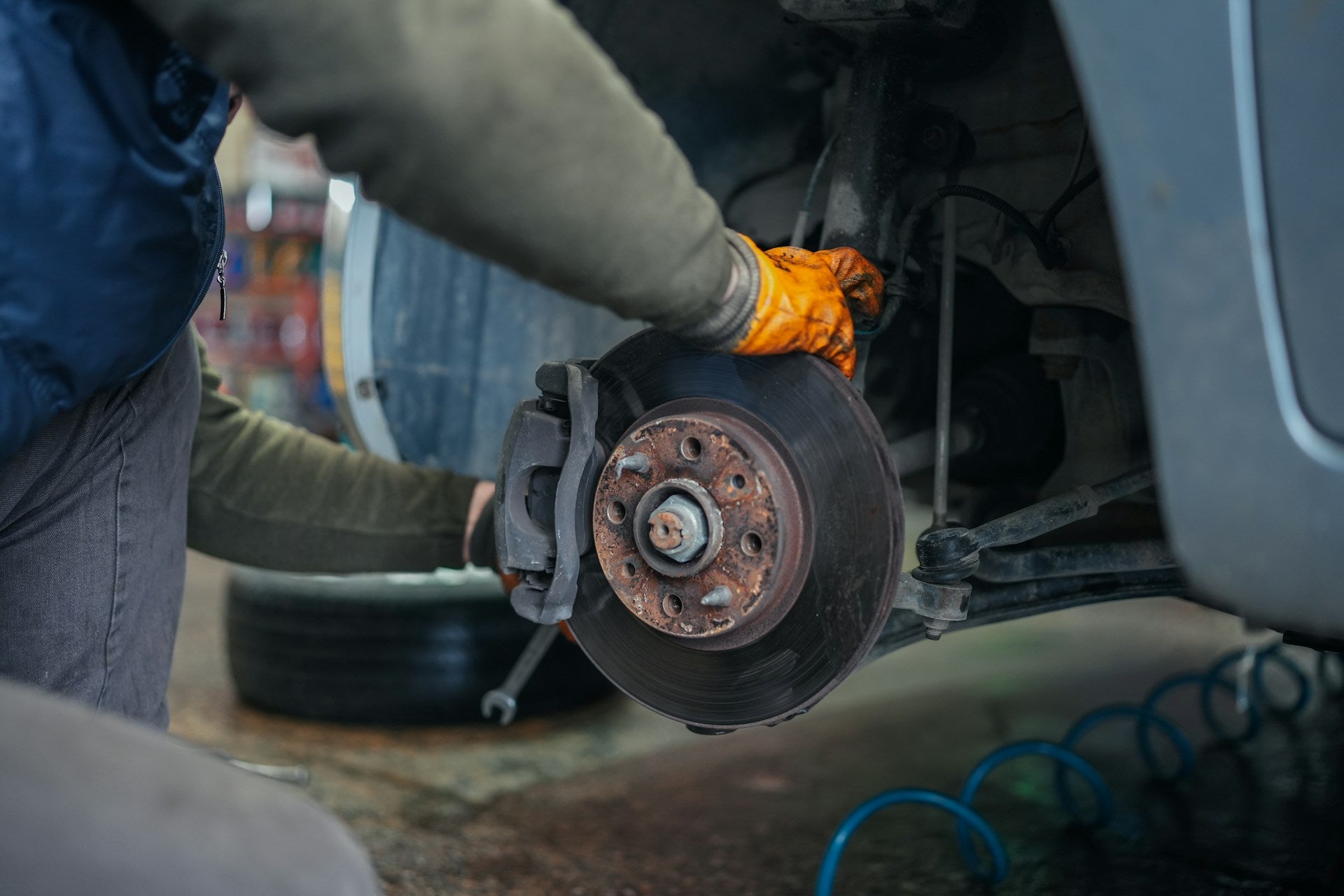
Rotors are the large metal discs that sit behind your wheels. The pads squeeze against them to create the friction that slows your Honda. Over time, heat, rust, and repeated heavy braking can cause rotors to warp, thin out, or develop deep grooves.

Our local Long Island climate does not make it easier on them. Humid summers, wet weather, and salty winter roads can all speed up rust on the rotor surface. When rotors start to wear out or warp, you might notice:

  • Vibration or pulsing in the brake pedal 
  • Shaking in the steering wheel when braking 
  • Scraping or grinding noises 
  • Visible grooves or uneven spots through the wheel openings 

There are usually two main ways to deal with worn rotors. Resurfacing, sometimes called “machining,” means removing a thin layer of metal to smooth the surface. Replacing rotors means installing new ones that meet current thickness and safety standards. At many dealerships, replacement is often recommended when rotors are too thin, badly warped, or heavily rusted, since there is less material left to safely resurface.

Calipers and brake hardware can also affect how your brakes feel and how long parts last. If a caliper seizes or a slide pin gets stuck, one pad can drag against the rotor all the time. That can cause:

  • Uneven pad wear 
  • Pulling to one side when braking 
  • Extra heat and faster rotor wear 

A careful brake inspection can catch these issues early, before they turn into bigger repairs. Timely pad service is one of the best ways to protect your rotors, since fresh pads are less likely to dig into the metal and cause deeper damage.

Brake Fluid Service: The Hidden Safety Expense

Brake fluid is what connects your foot to your brakes. When you press the pedal, the fluid carries that pressure through small lines to the calipers and wheel cylinders. Without healthy fluid, the system cannot build the pressure it needs to stop your Honda as smoothly and quickly as designed.

Brake fluid is designed to handle heat, but it also slowly absorbs moisture from the air over time. In a coastal area like Long Island, with humid summers and damp seasons, that moisture can build up faster. When that happens, it can lead to:

  • Rust and corrosion inside brake lines and components 
  • A softer or “spongy” feeling brake pedal 
  • Reduced braking power under hard stops or long downhill grades 

Brake fluid does not wear out overnight, but it does age. Honda vehicles generally have time or mileage-based recommendations for brake fluid replacement. Compared with some other brake jobs, fluid service is often a smaller part of your maintenance schedule, but it still plays a big role in overall safety.

Warning signs of old or contaminated brake fluid can include a soft pedal, the pedal sinking farther than normal, or feeling like the car takes longer to stop. During a professional inspection, technicians can check both the level and the condition of the fluid. Replacing it on a regular schedule works like inexpensive insurance, helping protect more costly brake parts and keeping the system working as it should.

Choosing Honda Brake Service in Hicksville

Driving in and around Hicksville is tough on brakes. Daily life might mean crawling along Jericho Turnpike, easing through school zones, and making lots of short trips where the brakes never really get a rest. Add in hot, sunny days and cold, wet winters, and your brake system has a lot to handle.

When it is time for brake work, having Honda-focused care makes a difference. With factory-trained technicians and Honda-specific tools and information, a dealership service team can:

  • Match the right pads and rotors to your exact Honda model 
  • Follow Honda procedures for inspections and brake fluid service 
  • Spot pattern issues common to certain models 
  • Give clearer explanations of what is urgent and what can wait 

On paper, some brake offers might look very low at first glance. That can sometimes mean generic parts, quick pad-only jobs, or basic service that does not include a full check of calipers, hardware, and fluid. When that happens, problems can pop up again sooner, which may cost more in the long run.

A detailed estimate that separates pads, rotors, and fluid service helps you see what you are paying for and why. Many drivers who search “Honda brake service” also look at online reviews, service specials, and payment options so they can keep their brakes in shape without surprises.

Turn Brake Worries Into Confidence

When you break things down, Honda brake care is easier to understand:

  • Brake pads are routine wear items and need attention most often 
  • Rotors usually come into play when you feel vibration, pulsing, or hear grinding 
  • Brake fluid follows a time or mileage schedule and protects the whole system 

Knowing which part does what helps you make calm choices instead of guessing. A quick brake check before big driving seasons, like summer road trips or busy holiday travel, can give you peace of mind before you load up the car and hit the road.

At North Shore Honda, we help drivers from Hicksville, Port Washington, Great Neck, Hempstead, and nearby areas stay ahead of brake problems. Our team can explain pad, rotor, and fluid needs in simple terms, walk you through a line-by-line estimate, and help you choose the timing that makes sense for your safety and your budget.

Keep Your Honda Stopping Safely and Confidently

If your brakes feel different or you are due for routine maintenance, North Shore Honda is ready to help you stay safe on every drive. Explore our recommended maintenance schedule and learn when to schedule a trusted Honda brake service near me so you can plan your visit with confidence. If you have questions or want to book an appointment, simply contact us and our team will guide you through your next service step.
Recommended Posts

How Often Does Your Honda Need a Cooling System?

How Often Does Your Honda Need a Cooling System?

THE SHORT ANSWER Your Honda doesn't need a new cooling system on any schedule. It needs its coolant replaced when the Maintenance Minder or owner's manual calls for it, plus a look at hoses, the radiator cap and related parts during routine service. Keep up with that, and the major cooling parts usually last a long time. You're inching along in July traffic with the AC on full, and your eyes drift to the temperature gauge. It's sitting where it always does, but you start wondering when anyone last looked at what keeps it there. That's a good question to ask before the gauge gives you a reason. Here's how we explain cooling system care to owners at North Shore Honda in Glen Head, NY. IN THIS POST Does my Honda ever need a whole new cooling system? How do I know when my coolant is due? What else in the cooling system wears out? Which warning signs should I never ignore? Can I check or top off coolant myself? What should I do next? Key takeaways Does my Honda ever need a whole new cooling system? Almost never. The system is designed to last the life of the car, as long as the coolant inside it gets replaced on schedule and the rubber and plastic parts get checked now and then. When people say "cooling system service," they usually mean draining the old coolant and refilling it with fresh. That matters because coolant does more than keep the engine from overheating in summer and freezing in winter. It also carries corrosion inhibitors that protect the aluminum in your engine and radiator. Those additives wear out over time, even when the fluid still looks clean in the reservoir. Once the protection is used up, coolant starts eating away at the metal it's supposed to protect. Clogged radiator passages, pitted water pumps and leaking gaskets follow, and each of those costs far more to fix than a coolant change. So here's the honest answer to the title: your Honda needs fresh coolant on Honda's schedule, plus a quick check of its hoses and cap whenever it's in for routine work. Do that, and the expensive parts rarely come up. How do I know when my coolant is due? Your Honda keeps track for you. Most late-model Hondas use the Maintenance Minder, which tracks how you drive and puts a service code on the dash when something is due. Coolant replacement shows up as sub-code 5, usually next to a main code like A or B. Don't go by miles alone, though. Coolant ages with the calendar too, so a car that sits in the garage most of the week can come due on time rather than mileage. Your owner's manual lists the time-based interval for your model, and it's worth checking if you don't drive much. A few things can bring the date closer: Lots of short trips where the engine never fully warms up Towing or carrying heavy loads in summer heat Long stretches of stop-and-go driving A past top-off with the wrong type of coolant If you bought your Honda used and don't know its history, don't assume it's been done. A technician can test the coolant's condition and freeze protection in a few minutes, and that tells you more than an old service sticker will. What else in the cooling system wears out? The parts that age Coolant gets most of the attention, but it runs through several parts that have their own lifespans. Over years of heating up and cooling down, rubber and plastic get brittle. Hoses can soften, swell or crack, often near the clamps where you can't easily see. The radiator cap holds the system under pressure, and a weak seal lets coolant boil off faster than it should. A thermostat can stick open, so the engine runs cool and the heater feels weak, or stick closed, which causes overheating. The water pump can start to weep coolant from its seal or make a whining noise as the bearing wears. Radiators can clog inside or leak where the plastic tanks meet the metal core. What a good inspection covers You don't need to replace any of these on a fixed schedule. You need someone who knows where to look. A proper check includes squeezing the hoses, pressure-testing the system to find slow leaks, and looking for dried coolant crust around fittings. Most cooling failures show warning signs well before the car leaves you stranded. Which warning signs should I never ignore? Your Honda will usually tell you when something's off. The trick is noticing early, while the fix is still small. The temperature gauge reads higher than normal or moves around when it usually stays put A sweet, syrupy smell around the car or through the vents Bright-colored drips or puddles under the front of the car Steam or vapor from under the hood The heater blows lukewarm or cold air on a winter morning You keep having to add coolant to the reservoir One of these doesn't automatically mean a big repair. A loose clamp or a tired radiator cap can cause several of them. Still, any of them is worth a visit soon rather than whenever it's convenient. If the gauge climbs toward hot, pull over somewhere safe and shut the engine off. Driving an overheating engine even a short distance can warp the cylinder head or damage the head gasket, and that turns a small problem into a very large one. Let it cool completely, then call for help instead of guessing. Can I check or top off coolant myself? Checking the level Yes, and it's a good habit. Find the translucent reservoir under the hood and see whether the level sits between the marks. Only check it with the engine cold. Never open the radiator cap on a hot engine. The system is under pressure, and hot coolant can spray out and burn you badly. Topping off versus a full change If the level is a little low, adding Honda's own long-life coolant is fine. It comes premixed, so you don't have to dilute it. You can pick some up from our Honda parts department and keep a bottle in the garage. Avoid mixing in universal or off-brand coolant. Different formulas can react with each other and weaken the protection you're counting on. A full coolant replacement is a different job. After the old fluid drains, the system has to be refilled and bled so no air pockets stay trapped in the engine. Air left behind can cause hot spots and overheating even though the reservoir looks full. And if you find yourself topping off over and over, the real issue is a leak, and more coolant won't fix it. What should I do next? Start by looking at your dash. If the Maintenance Minder shows sub-code 5, or you can't remember when the coolant was last changed, that's your sign. Check your owner's manual for the time-based interval too, especially if your Honda doesn't get driven much. When it's due, you can book service online and have our technicians replace the coolant with Honda's formula, bleed the system properly, and look over the hoses, cap and water pump while they're in there. If anything needs attention, you'll hear about it plainly, with no pressure to do more than the car needs. North Shore Honda has served its community for more than 35 years. Our philosophy is simple: fair, easy, honest and sincere. That's how we approach something as routine as a coolant change. Customers are treated as part of the North Shore Honda family, which means we'd rather catch a cracked hose in the shop than hear about it from you on the side of the road. So next time you're stuck in summer traffic, you can look at that gauge and not think twice about it. Where 611 Glen Cove Rd Glen Head, NY Call (516) 629-5612 KEY TAKEAWAYS Coolant wears out with age and miles, so replace it when your Honda's Maintenance Minder shows sub-code 5 or the owner's manual's time interval comes up. A climbing temperature gauge, a sweet smell, steam, or puddles under the car mean you should get it checked right away. Check the coolant level only when the engine is cold, use Honda's coolant, and leave full coolant changes to a technician. FAQ Common questions Is it okay to use universal coolant from an auto parts store? For an emergency top-off to get you home, it's better than running low. For regular use, stick with Honda's long-life coolant. It's made for the metals and seals in your engine, and mixing formulas can weaken corrosion protection. If universal coolant has already gone in, mention it at your next service so a technician can decide whether a full change makes sense. Can I keep driving a short distance if the temperature gauge is climbing? It's not worth the risk. Pull over somewhere safe, turn the engine off, and let it cool completely before you open anything. Even a few extra miles on an overheating engine can damage the head gasket or cylinder head, and those repairs cost far more than a tow. Why is my heater blowing cold air even though the engine seems fine? The heater uses hot coolant to warm the cabin, so weak heat often points to low coolant, trapped air, or a thermostat stuck open. None of those should be ignored, because the same problem that keeps you cold can affect how well the engine regulates its temperature. Have the system checked soon. Want to see it in person? Come by for a test drive, or browse what is on the lot right now. Schedule Service Order parts Or call (516) 629-5612 · 611 Glen Cove Rd, Glen Head Or keep browsing New inventory Current offers Financing Value your trade Contact us Used cars

How Long Does Routine Service Take?

How Long Does Routine Service Take?

THE SHORT ANSWER Most routine visits, like an oil change with a quick inspection, are among the shortest jobs a service department handles, and many people simply wait for them. A larger scheduled service with several items due can take a few hours, and anything found during inspection can add time. Booking ahead and knowing what your car is due for are the two best ways to keep your visit short. How long will your car actually be in the shop? It's the first thing most people want to know before booking routine maintenance, and the answer depends less on the work itself than on what's due and how you schedule it. Here's how the team at North Shore Honda in Glen Head, NY, would explain it, one common myth at a time. IN THIS POST Myth: An oil change takes your whole morning Myth: Every service takes about the same time Myth: Showing up first thing gets you out fastest Myth: If they find something, you're stuck for days Key takeaways Myth: An oil change takes your whole morning Plenty of people block off half a day for an oil change because that's what happened once at a crowded shop. In reality, draining the oil, swapping the filter and refilling is one of the shortest jobs a technician does. Add a tire pressure check and a look at fluids and wipers, and it's still a quick visit. What actually eats your time is everything around the work. When the shop is full and you have no appointment, you wait for a bay to open. A car that turns out to be due for more than you expected means a longer ticket. And a finding during inspection, like a worn brake pad, means a conversation before anything else happens. So the honest answer is that the work is fast and the waiting is variable. You control more of that variable than you might think, which is where the rest of this guide comes in. What a basic visit usually covers Engine oil and filter change Tire pressure set to the door-jamb sticker Fluid levels, wipers and lights checked A walk-around for anything leaking, worn or loose Myth: Every service takes about the same time Your Honda doesn't run on a one-size-fits-all schedule. Most late-model Hondas use the Maintenance Minder, which tracks how you actually drive and shows a code on the dash when service is due. That code is the best preview you'll get of how long your visit will run. Main codes come in two flavors. An A service centers on the oil change, while a B service adds a more thorough inspection of brakes, suspension, steering, exhaust and more. Numbers beside the letter flag extra items: 1: tire rotation 2: air filters and a drive belt check 3: transmission fluid 4: spark plugs and a valve clearance check 5: engine coolant 6: rear differential fluid, on models that have one 7: brake fluid A1 is a short visit. B with a 3 and a 4 attached is a different day entirely, because fluid exchanges and spark plug work simply take longer. Older Hondas without the Minder follow a mileage-based schedule in the owner's manual, and the same logic holds: more items due at once means a longer visit. Not sure what your code means? Snap a photo of the dash before you call, and the advisor can tell you what to expect. Myth: Showing up first thing gets you out fastest Lining up at opening without an appointment feels efficient, but it often isn't. A walk-in has to be fit around cars that were already scheduled, and that's when a quick job turns into a long wait. Booking ahead is the single biggest thing you can do to shorten your visit. Before you arrive Note your Maintenance Minder code or current mileage Mention any noise, warning light or odd behavior when you book Ask whether any recalls are open on your vehicle Decide in advance whether you'll wait or drop off Waiting versus dropping off For an A-type service, waiting usually makes sense. With a bigger B service carrying several sub-items, or anything diagnostic, dropping the car off tends to be less stressful than watching the clock. Leave a phone number you'll actually answer, so the advisor can reach you if something needs your OK. It also helps to book service online at a time that suits you rather than calling during a rush. Telling the team about that rattle or warning light up front lets them plan bay time and parts, instead of discovering it halfway through. Myth: If they find something, you're stuck for days Inspections exist to catch problems early, and sometimes they do. Finding a worn brake pad or a weeping hose doesn't mean your car gets held hostage. At a reputable shop, nothing beyond what you booked gets done without your approval, and you're free to say not today. Time comes into it in two ways. Common wear parts are usually on hand, so many fixes can happen the same visit if you agree to them. Less common parts may need ordering, and in that case you can often drive home and come back once they arrive, as long as the car is safe to drive. Ask your advisor plainly which items are urgent and which can wait. North Shore Honda is family-owned and operated and has served its community for more than 35 years. Its philosophy is fair, easy, honest and sincere, and that's a good standard for any service conversation: a clear explanation, your call on timing, no pressure. What to do next Check your dash for the Maintenance Minder code, pick a time that works, and decide whether you'll wait or drop off. Got a question about a specific symptom? It's easier to sort out ahead of time, so reach out to the team before your visit. Where 611 Glen Cove Rd Glen Head, NY Call (516) 629-5612 KEY TAKEAWAYS An oil change and basic inspection is a quick visit; bigger scheduled services naturally take longer. Your Maintenance Minder code is the best preview of how involved your visit will be. Booking ahead and mentioning concerns up front does more to shorten your visit than anything else. FAQ Common questions Can I wait at the dealership while my car is serviced? For shorter jobs like an oil change with a basic inspection, many people do. For a larger scheduled service or anything that needs diagnosis, dropping the car off is usually more comfortable. Mention your preference when you book so the timing can be planned around it. Does a tire rotation add much time? Not much. It's commonly paired with an oil change, which is why you'll often see A1 or B1 on the Maintenance Minder. Rotating at those intervals helps your tires wear evenly. Will an open recall make my service visit longer? It depends on the recall. Some are quick checks or updates, while others take longer or need parts ordered first. Ask about recalls when you book so the team can check your vehicle and have what they need ready. My Maintenance Minder hasn't come on, but it's been a long time since my last oil change. Should I wait? Honda recommends changing the oil at least once a year even if the Minder hasn't called for it, since oil ages with time as well as miles. If you drive very little, an annual visit keeps you on track. Why can a dealership visit take a bit longer than a quick-lube stop? A dealership visit often includes a broader inspection, a check for open recalls, and work done to Honda's own procedures. That extra attention can add a little time, but it's also how small issues get caught before they become big ones. Let us take care of it Book online in a minute and pick a time that works for you. Book service Order parts Or call (516) 629-5612 · 611 Glen Cove Rd, Glen Head Or keep browsing Current offers Financing New inventory Contact us Used cars Certified pre-owned

How Big Should Your Down Payment Be?

How Big Should Your Down Payment Be?

THE SHORT ANSWER If you can do it comfortably, aim for roughly 20% down on a new car and about 10% on a used one, because that keeps your loan from outrunning the car's value. If you can't, a smaller down payment can still work, as long as you understand the trade-offs and never drain your emergency savings to hit a number. How much money should you actually put down on a car? It's the first question most shoppers ask, and the honest answer depends on your budget, the car you pick, and how long you plan to keep it. Here's what the team at North Shore Honda in Glen Head, NY, tells people every day: the common beliefs about down payments, and what really holds up. IN THIS POST Myth: You need 20% down or you can't buy Myth: Zero down is free money Myth: Your trade-in is separate from your down payment Myth: Put down as much as you possibly can Key takeaways Myth: You need 20% down or you can't buy The 20% rule gets repeated so often that many people assume it's a lender requirement. It isn't. It's a rule of thumb, and a good one, but plenty of shoppers buy with less. Here's what a down payment really does. It lowers the amount you borrow, which brings down your monthly payment and the total interest over the life of the loan. A larger amount up front can also make your application look stronger to a lender, though approval and rate always come down to your full credit picture. Where the numbers come from The usual guideline is about 20% on a new car and around 10% on a used one. New cars lose value fastest in their early years, so a bigger cushion keeps your balance closer to what the car is worth. Used and certified cars have already taken that first hit, so a smaller down payment goes further. If 20% isn't realistic right now, that doesn't close the door. It means you should weigh the total cost of the loan, not just the monthly payment, and pick a term you can live with. Checking current offers is worth a minute too, since manufacturer incentives can change the math. Myth: Zero down is free money No-money-down deals feel like you're keeping cash in your pocket. You are, today. But you're financing the whole price plus taxes and fees, and that costs you in interest. A bigger risk is negative equity, which means owing more than the car is worth. Cars depreciate quickly, and with nothing down, your balance can sit above the car's value for a long stretch. That matters if the car is totaled or stolen, or if you want to trade it in early. If you go with little or nothing down, protect yourself: Ask about gap coverage, which can help cover the difference between what insurance pays and what you still owe. Keep the loan term as short as your budget allows. Plan to keep the car long enough for your payments to catch up to its value. Another way to shrink what you need up front is to lower the price itself. A Honda Certified pre-owned vehicle has already absorbed much of its early depreciation, so the same down payment covers a bigger share of the loan. North Shore Honda offers new Honda and Honda Certified inventory, so you can compare both side by side. Myth: Your trade-in is separate from your down payment Many shoppers save cash for a down payment and treat the trade-in as a bonus. In reality, trade-in equity counts toward your down payment just as cash does. Equity is the difference between what your car is worth and what you still owe on it. Own it outright and the whole trade value works for you. Still paying it off? Only the portion above your payoff balance helps. When the trade works against you If you owe more than the car is worth, that shortfall doesn't disappear. It usually gets added to the new loan, which raises what you finance and can leave you upside down from day one. Extra cash down is the cleanest way to cover that gap. Before you shop, get your payoff amount from your lender and value your trade so you know where you stand. Add that equity to the cash you plan to bring, and you have your real down payment. In New York, your trade's value generally reduces the taxable price of your next car, which is one more reason trading in can stretch your money further than selling privately. Myth: Put down as much as you possibly can It sounds responsible, and up to a point it is. But emptying your savings to lower a car payment can leave you exposed the first time a furnace dies or a paycheck runs late. The expert tip: start with your cushion, then decide First, set aside what you want in reserve, ideally a few months of expenses. Whatever you have beyond that is your available down payment. Then look at how much each extra dollar down actually saves you in interest. When rates are low, the savings from a bigger down payment may be worth less than keeping cash on hand; if rates are high, putting more down pays off faster. A few moves that help: Get prequalified so you have a sense of your likely rate before you choose an amount. Compare the total cost at two or three down payment levels, not just the monthly figure. Remember that cash you put down can't come back out, while many auto loans let you pay extra later. Confirm there's no prepayment penalty. Our financing team can run those side-by-side numbers with you. North Shore Honda's motto is to take care of customers and the business will follow, and that means helping you land on a down payment that fits your life. Where 611 Glen Cove Rd Glen Head, NY Call (516) 629-5612 KEY TAKEAWAYS A bigger down payment shrinks what you borrow and the interest you pay. Trade-in equity counts toward your down payment, just like cash. Keep an emergency cushion first, then put the rest toward the car. FAQ Common questions Is it better to put more money down or hold out for a lower rate? Both lower your total cost, so compare them directly. Run the loan at a couple of down payment amounts and rates, and look at the total interest paid. Often the best move is a reasonable down payment plus the best rate your credit qualifies for. Can I buy a car with no money down? It's often possible, depending on your credit, the lender, and the vehicle, but it's never a given. If you go that route, keep the term short and consider gap coverage so you're protected while you owe more than the car is worth. Does a bigger down payment help if my credit isn't great? It can. Putting more down lowers the lender's risk, which may improve your chances or your terms. Approval and rate still depend on your overall credit history and income, so a larger down payment helps but doesn't settle the question on its own. Can I use a credit card for my down payment? Some dealerships accept part of a down payment on a card, and policies and limits vary, so ask ahead. Unless you can pay the card off right away, you'd be trading loan interest for credit card interest, which is usually higher. Should I put money down on a lease? Many people keep the amount due at signing small on a lease. If a leased car is totaled early, money you put down to lower the payments is usually gone. A smaller upfront amount means slightly higher payments but less cash at risk. Know your numbers before you shop Our finance team can walk you through options that fit your budget. Apply for financing Value your trade Or call (516) 629-5612 · 611 Glen Cove Rd, Glen Head Or keep browsing Current offers New inventory Used cars Contact us Certified pre-owned Used specials